
Double-click to edit...


The Timberland digital team partnered with marketing, commerce and analytics teams across all of the VFC brands and with the VFC digital lab team to evaluate, implement and iterate platform and site functionality. We vetted projects for viability, ease of implementation, strategy against the platform roadmap, user experience, and overall business impact. Project scope and requirements were gathered across brands. All projects were implemented and tested on one of our brands for effectiveness before rolling out for availability across the platform.
Double-click to edit...
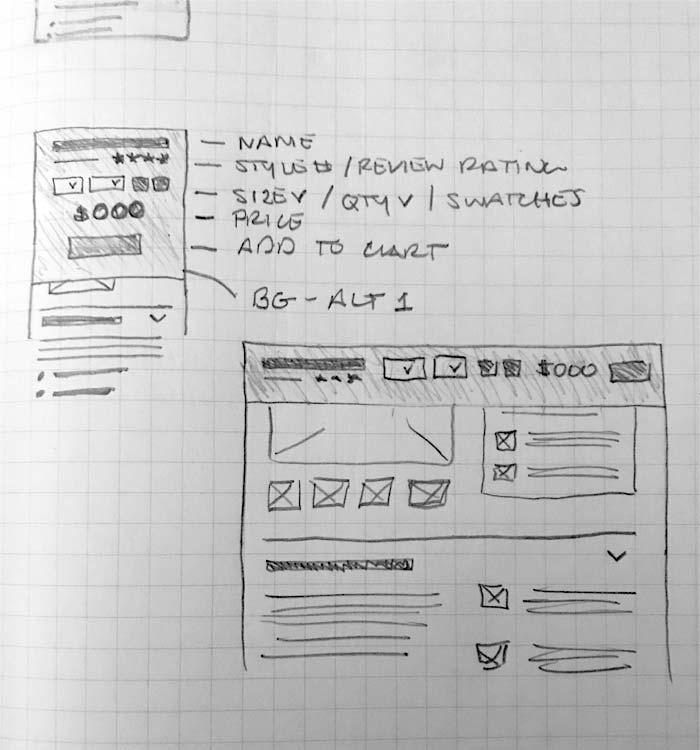
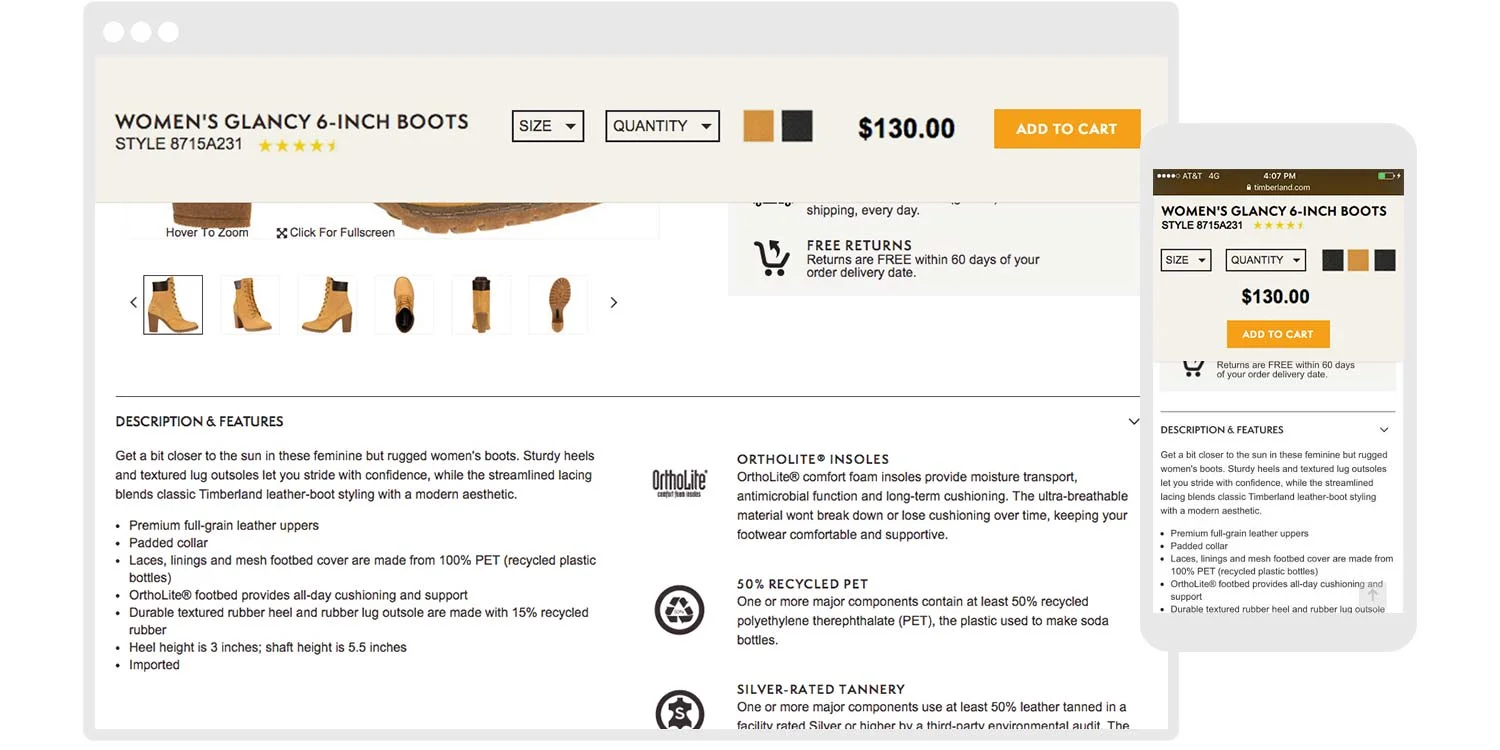
The ecommerce teams at Vans, North Face and Timberland were seeing long scroll activity on some product detail pages. This was great news that consumers were interested in product descriptions, features and benefits and the newest implementation of reviews. However, the data revealed that the further down the page the user scrolled, the lower the add to cart percentage. We tested sticky add to cart functionality to see if we could increase add to cart on scroll.
We tested several configurations of the sticky navigation elements (inclusion, order, and placement) for both desktop and mobile. Simple sketch wireframes were used to vet configurations with the business and engineering teams before creating high fidelity prototypes for usability testing and early data capture. This functionality was then tested on key Timberland footwear products to gather data and confirm previous results before rolling out to the other brands. Element styling was aligned to product detail page styling for consistency and code efficiency–a key consideration when implementing functionality across the platform.
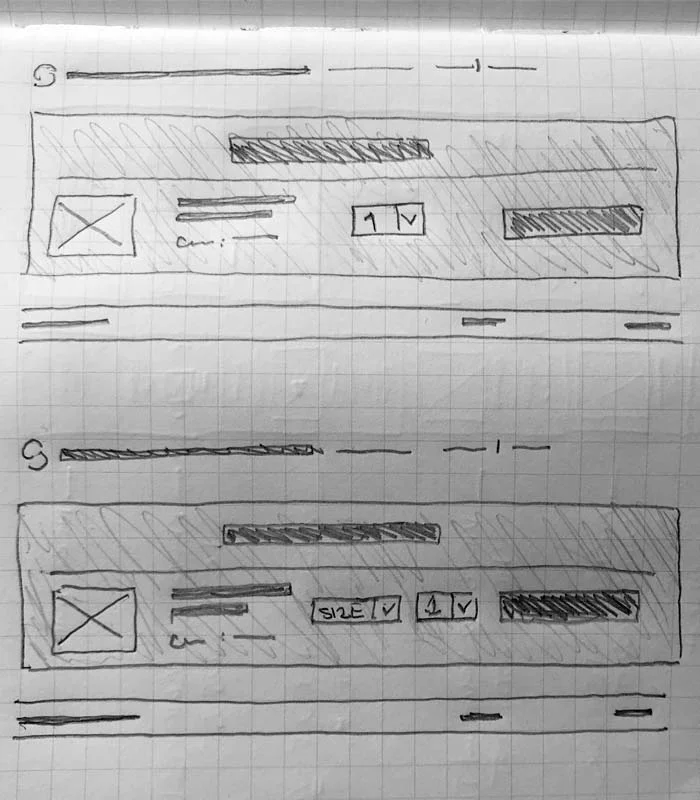
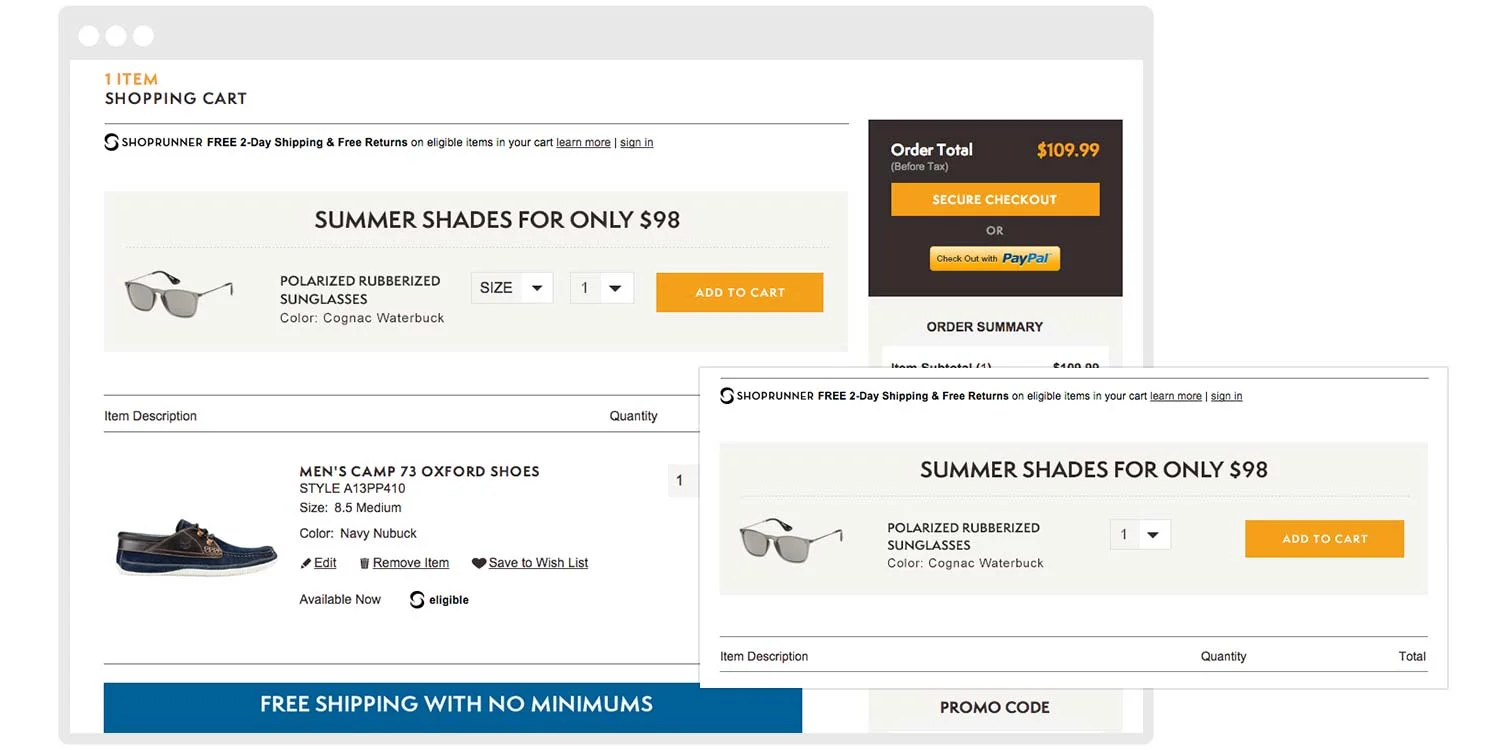
The business teams knew that some items were an easy add-on at the instore checkout. While presenting those same items in dynamic “you might also like” components on product detail or cart summary pages produced some results, it wasn’t inline with the add to cart rates we were seeing in the physical store environments. And for some products, we were seeing an increase in cart abandonment. The assumption was the with the “you might also like” components, the consumer is taken away from checkout to the product detail page in order to add the item to their cart.
We researched options and platform functionality to evaluate our options of presenting add-on items in cart. We explored the idea of using the quick shop functionality–presenting the user with just enough information to add to cart. We worked with the business teams to gather product requirements and the engineering teams on scope and viability of our ideas. We shared quick sketches of layouts with the teams before moving to high fidelity prototypes. The component was built with an option for size & quantity or size only configurations so the business teams had flexibility across product lines. The full functionality was tested on the Timberland site before rolling out across the platform.
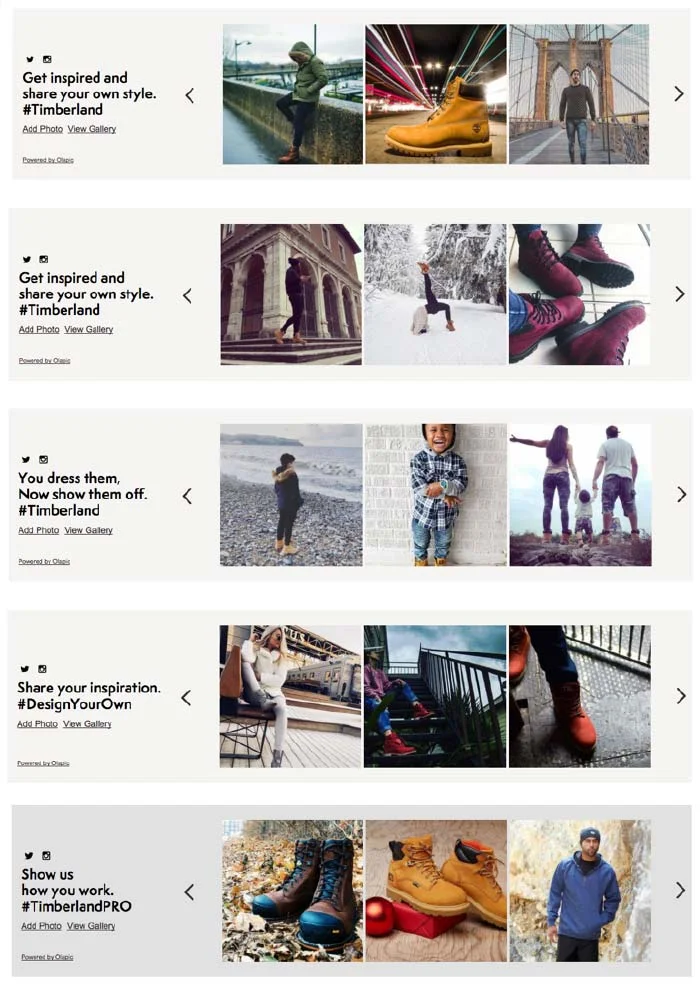
We had great initial success implementing a branded Olapic user generated content component onto the site. We created curated feeds for campaigns, genders, categories, events and partnerships. Data showed that the inclusion of UGC on landing pages drove product detail page views and conversion. The UGC program also created increased follows and engagement on social media, particularly on Instagram. The marketing and commerce teams wanted the ability to include more images on initial view wherever possible. More images, more reach, more revenue.
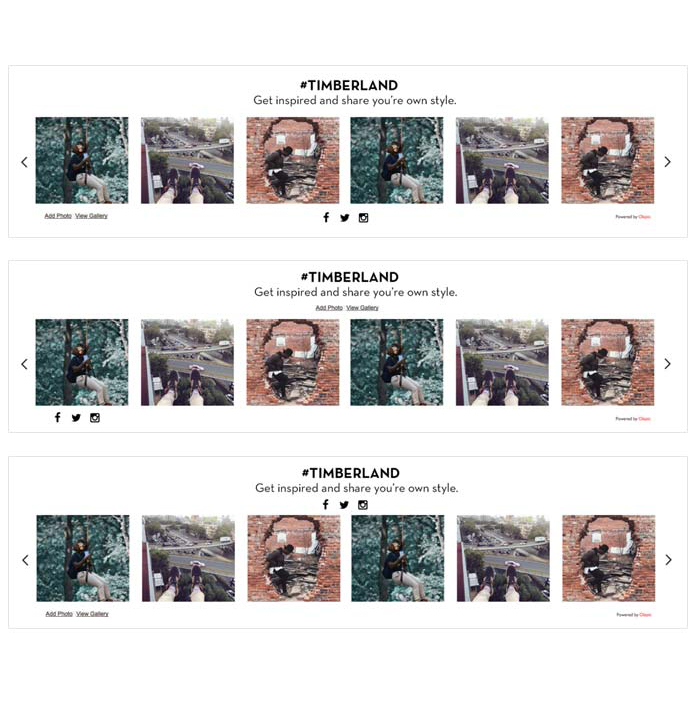
While the large majority of images were coming from Instagram, the change to Instagram’s image requirements allowed for both vertical and horizontal images. UGC feeds that featured vertical or horizontal images appeared broken and the data showed those feeds were less effective in both engagement and click through. We added more white space between images to account for the variable image ratios and showed images across the full width of the component. We made the images slightly smaller than previous to maintain the vertical height on the component, but this did not affect engagement. We tested several configurations–including the upload and gallery links, and available social media channels above and below the images.
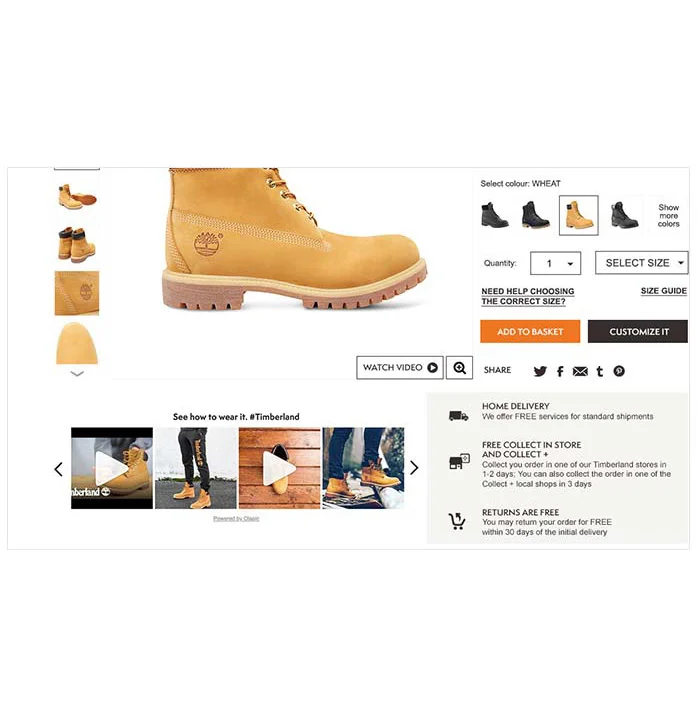
Based on the data showing that users coming from the UGC component to pdp converted at a higher rate, we tested a UGC component on select pdp pages. Where we had images for the exact product, we saw a great lift in conversion. This version will be implemented across products as enough user generated content becomes available for each silhouette.
UX Lead: Ali Pike
Engineering: Sapient Razorfish
Product Team: VF Digital Lab
Business Team: Timberland, Vans, Reef E-commerce Teams